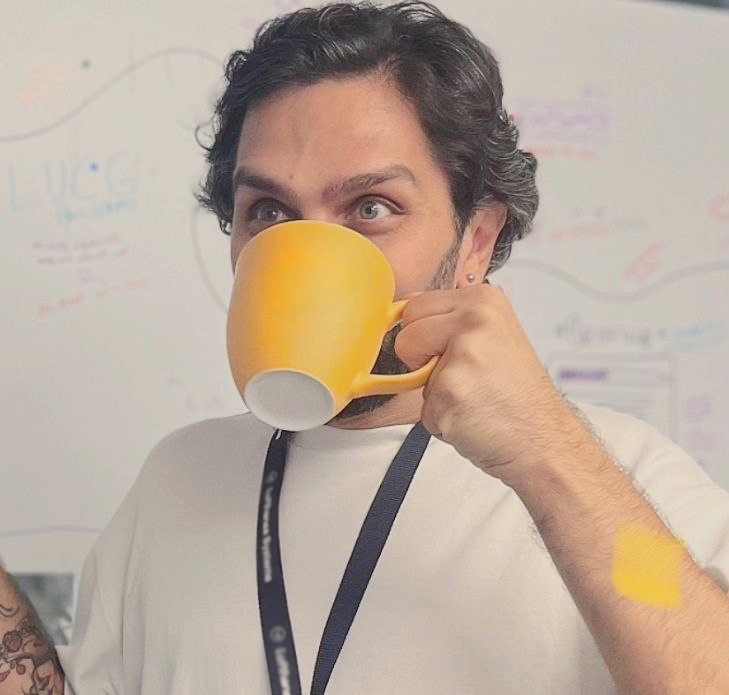

I was in my early twenties, under more pressure than I knew how to handle, when my mother and I had a fight. In the middle of it, I started to cry, and she said, "Stop crying. Only weak people cry. Are you weak?"
She was the head of our household, both mother and father, and she wanted my brother and me to grow up strong and resilient. She said what she had been taught, and what life had taught her. She didn't know that crying is one of the body's own ways of regulating itself.
Crying isn't weakness
Crying is not a character failing. It is a physiological process. Emotional tears can activate the parasympathetic nervous system, the body's calming mode, and they are associated with the release of oxytocin and endorphins, which can ease pain and lift mood (Gračanin, Bylsma, & Vingerhoets, 2014).
Holding tears back does not make you strong. It takes away one of your natural ways of settling yourself. Strength, in this sense, is not the absence of feeling. It is the capacity to let the body do what it already knows how to do.
What holding it in costs
By "holding it in," I mean making a habit of hiding what you feel: keeping a straight face, saying "I'm fine," swallowing the lump in your throat. It changes how you look far more than how you feel.
People who regularly hide their emotions show much less expression, but they still experience just as much negative emotion. Those who do this as a pattern report less joy, more negative emotion, poorer relationships, and lower well-being (Gross & John, 2003).
It also isolates us. People who habitually hide their feelings find it harder to build the support networks they later need (Boroş, van Gorp, & Boiger, 2019). And over twelve years, people who bottled up their emotions more were somewhat more likely to die, including from cancer (Chapman, Fiscella, Kawachi, Duberstein, & Muennig, 2013). That finding is observational, not a verdict on any one person. It is a reminder that the cost of suppression is not only social. It can also be physical.
When feelings go quiet
Some people end up emotionally numb. You smile when expected and nod in conversations, but you feel detached, and joy disappears along with sadness. Numbness is a signal, not a personality trait.
In a large survey, 46% of people treated for depression reported emotional blunting, and it was linked to the depression itself, not only to medication (Goodwin, Price, De Bodinat, & Laredo, 2017).
If you recognise this, you do not have to wait for the feeling to come back first. Start with what the body can still do.
A way back
If you feel flat, don't start by forcing a bigger feeling. Sensation is often the doorway before language is.
- Start with the body. A warm shower, something with texture in your hands, naming five things you can see.
- Add movement - a walk, stretching, anything that reminds the body it is here.
- Sit with someone you trust where you don't have to perform.
- Write about the blankness itself - not to fix it, just to stay with it.
If it lasts more than a few weeks or affects daily life, try to talk to an expert.
For a closer look at how the nervous system prepares for stress, see emotional regulation frameworks.
The script we inherit
Many of us grow up with a "protector and breadwinner" script that says needs are handled quietly. Traditional masculine norms can keep men from seeking help (Seidler, Dawes, Rice, Oliffe, & Dhillon, 2016). Ideals of independence, stoicism, and pain endurance increase vulnerability to loneliness, and self-reliance often wins out over reaching for support (Nordin, Degerstedt, & Granholm Valmari, 2024).
We also describe our needs lightly, as if everything were pink and fluffy, because we don't want to dramatise. But understatement doesn't make something less serious.
When I was a teenager, someone from my sports team died by suicide. It was the first time I understood that men can be lonely and vulnerable too. The research points the same way. In a study of 28,369 US men, suicide and accidental deaths were significantly more common among the less socially connected (Eng, Rimm, Fitzmaurice, & Kawachi, 2002).
Understatement doesn't make something less serious.
Why one trusted person matters
It protects your health. Across 148 studies, people with stronger social relationships were about 50% more likely to survive over the follow-up period, an effect researchers have compared to smoking up to 15 cigarettes a day (Holt-Lunstad, Smith, & Layton, 2010). Among older men, more close friends meant a 29% lower risk of death (Eng et al., 2002). And in nearly 6,000 British men, the most socially engaged had about 30% lower cardiovascular mortality than the least (Ramsay, Ebrahim, Whincup, Papacosta, Morris, Lennon, & Wannamethee, 2008).
It takes pressure off your partner. Men name their romantic partner as their main confidant more often than women do (Liao, McMunn, Mejía, & Brunner, 2018), and a 2025 analysis of 50+ studies found men lean on partners for emotional support more than women, partly because they get less from friends and family (Währing et al., 2025). A trusted male confidant shares that load.
It may also buffer stress. In male rats, moderate stress increased social bonding and oxytocin (Muroy, Long, Kaufer, & Kirby, 2016). That is animal research, not a map of human friendship. Still, it fits a broader picture: connection is one of the ways mammalian nervous systems settle.
Connection often starts sideways, through doing something together. That is the idea behind Men's Sheds, community workshops where men build things side by side, which are studied as a way to support male mental health (Sieusahai, 2026). If conversations often feel rushed, you may also find value in listening before you speak and in thinking at your own pace.
The day my friend cried
A few years ago, a good friend of mine did something I never expected. He's the guy who is always calm, always joking, always the one holding everyone else together. One day, he opened up to me, and then he cried, right there next to me.
My first reaction was a wave of awkwardness I couldn't control. I didn't know where to look or what to say. But I stayed. I put the awkwardness aside, listened, and took what he said seriously.
I think about that moment often. Being trusted with that is one of the most meaningful things a friend has ever given me.
I stayed. I put the awkwardness aside, listened, and took what he said seriously.
What to do
Do you have that one person? If not, start looking: a team, a workshop, a regular walk. If you do, open up the next time something weighs on you. And when he does the same, put the phone down and listen. Don't deflect with a joke or a quick pat on the back. Cry when your body asks you to. It is part of how you regulate yourself.
Frequently Asked Questions
Is crying a sign of weakness?
No. Emotional crying is one of the body's ways of settling after distress. Holding tears back does not make you stronger; it mainly removes a natural form of self-soothing (Gračanin et al., 2014).
What does it actually cost to hide what you feel?
Habitual suppression tends to reduce visible expression more than it reduces the feeling itself. Over time it is linked with less joy, more negative emotion, thinner support, and poorer well-being (Gross & John, 2003; Boroş et al., 2019).
Why do so many men rely on one partner for everything?
Masculine norms of self-reliance and stoicism can make it harder to seek help from friends or family (Seidler et al., 2016). Many men then place most of their emotional weight on a romantic partner. A trusted male confidant shares that load (Liao et al., 2018; Währing et al., 2025).
What if I feel numb rather than sad?
Emotional blunting is common in depression and is a signal, not a personality. Start with the body - warmth, texture, naming what you can see - and if it lasts more than a few weeks or interferes with daily life, try to talk to an expert (Goodwin et al., 2017).
How do I start if I don't have that one person?
Start sideways. Shared activity often comes before shared feeling: a team, a workshop, a regular walk, a Men's Shed. You do not have to begin with a confession. You begin by showing up next to someone, more than once.
References
- Boroş, S., van Gorp, L., & Boiger, M. (2019). When holding in prevents from reaching out: Emotion suppression and social support-seeking in multicultural groups. Frontiers in Psychology, 10, 2431. (doi.org)
- Burgess, L. (2026). Eight benefits of crying. Medical News Today. medicalnewstoday.com
- Chapman, B. P., Fiscella, K., Kawachi, I., Duberstein, P., & Muennig, P. (2013). Emotion suppression and mortality risk over a 12-year follow-up. Journal of Psychosomatic Research, 75(4), 381–385. (doi.org)
- Eng, P. M., Rimm, E. B., Fitzmaurice, G., & Kawachi, I. (2002). Social ties and change in social ties in relation to subsequent total and cause-specific mortality and coronary heart disease incidence in men. American Journal of Epidemiology, 155(8), 700–709. (doi.org)
- Goodwin, G. M., Price, J., De Bodinat, C., & Laredo, J. (2017). Emotional blunting with antidepressant treatments: A survey among depressed patients. Journal of Affective Disorders, 221, 31–35. (doi.org)
- Gračanin, A., Bylsma, L. M., & Vingerhoets, A. J. J. M. (2014). Is crying a self-soothing behavior? Frontiers in Psychology, 5, 502. (doi.org)
- Gross, J. J., & John, O. P. (2003). Individual differences in two emotion regulation processes: Implications for affect, relationships, and well-being. Journal of Personality and Social Psychology, 85(2), 348–362. (doi.org)
- Holt-Lunstad, J., Smith, T. B., & Layton, J. B. (2010). Social relationships and mortality risk: A meta-analytic review. PLoS Medicine, 7(7), e1000316. (doi.org)
- Liao, J., McMunn, A., Mejía, S. T., & Brunner, E. J. (2018). Gendered trajectories of support from close relationships from middle to late life. Ageing & Society, 38(4), 746–765. (doi.org)
- Muroy, S. E., Long, K. L. P., Kaufer, D., & Kirby, E. D. (2016). Moderate stress-induced social bonding and oxytocin signaling are disrupted by predator odor in male rats. Neuropsychopharmacology, 41, 2160–2170. (doi.org)
- Nordin, T., Degerstedt, F., & Granholm Valmari, E. (2024). A scoping review of masculinity norms and their interplay with loneliness and social connectedness among men in Western societies. American Journal of Men's Health, 18(6). (doi.org)
- Ramsay, S., Ebrahim, S., Whincup, P., Papacosta, O., Morris, R., Lennon, L., & Wannamethee, S. G. (2008). Social engagement and the risk of cardiovascular disease mortality. Annals of Epidemiology, 18(6), 476–483. (doi.org)
- Seidler, Z. E., Dawes, A. J., Rice, S. M., Oliffe, J. L., & Dhillon, H. M. (2016). The role of masculinity in men's help-seeking for depression: A systematic review. Clinical Psychology Review, 49, 106–118. (doi.org)
- Sieusahai, J. K. (2026). The role of activity engagement, social connection, and masculinity norms in men's shed outcomes for male mental health: A narrative review. Frontiers in Public Health.
- Währing, I. V., et al. (2025). Romantic relationships matter more to men than to women. Behavioral and Brain Sciences.
Crying is not the opposite of strength. Isolation is. One person who can hear you, and one moment where you stay instead of looking away, is already a beginning.
Explore more on the Mindly journal or connect if you would like a conversation about emotional needs, friendship, and what support might look like for you.